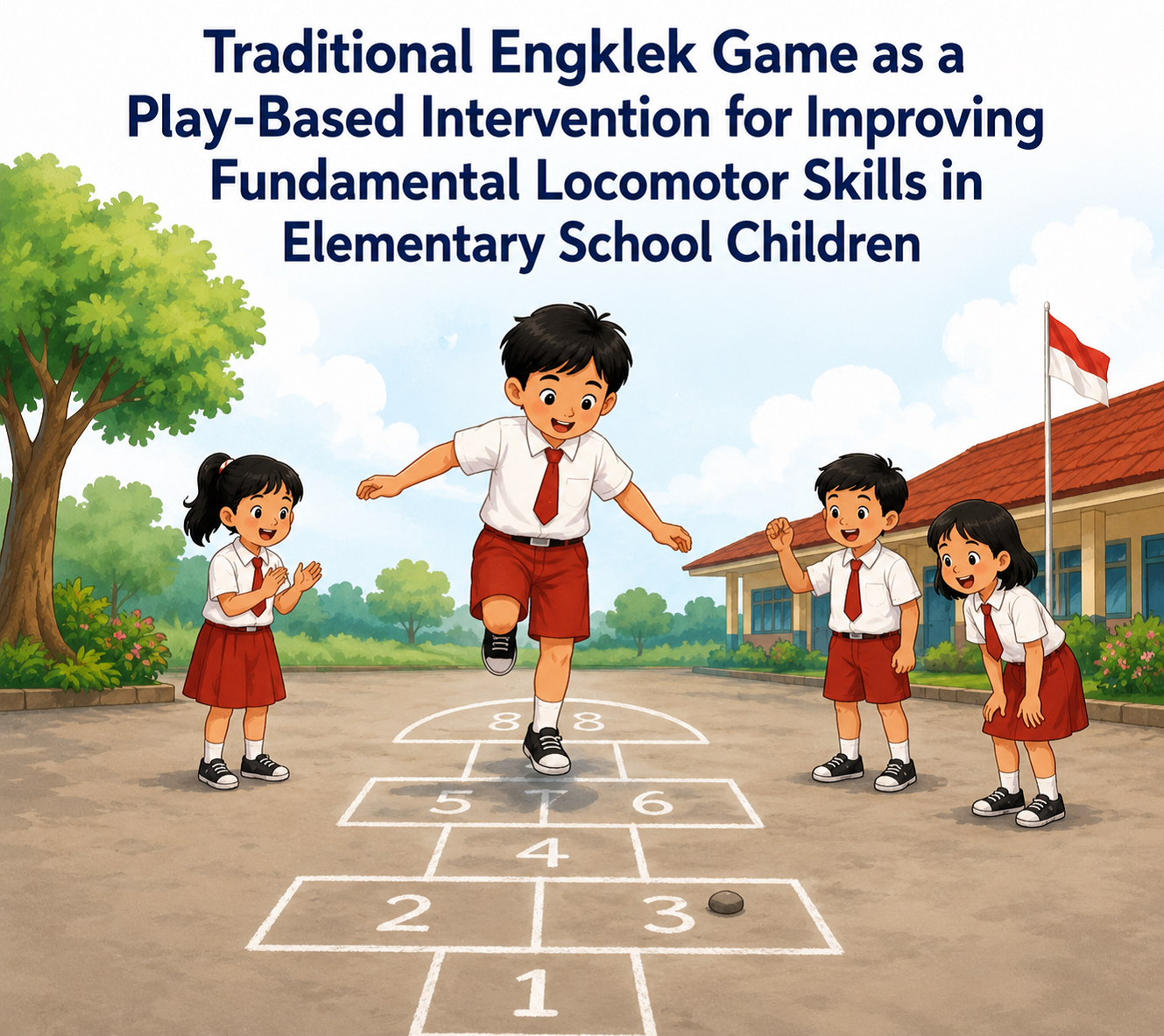
Traditional Engklek Game as a Play-Based Intervention for Improving Fundamental Locomotor Skills in Elementary School Children
DOI:
https://doi.org/10.59698/spectapro.v1i2.603Abstract
Background of study: Fundamental Movement Skills (FMS) are essential for children's physical development and long-term participation in physical activity. However, increasing sedentary behavior among children has contributed to a decline in motor competence worldwide.
Aims and scope of paper: This study aimed to examine the effectiveness of the traditional Indonesian game Engklek in improving locomotor skills among elementary school students.
Methods: A quasi-experimental design with a non-equivalent control group pretest–posttest was employed involving 26 third-grade students (14 boys and 12 girls) from MI Al Hikmah Sendang, Indonesia. The experimental group (n = 13) participated in an Engklek-based intervention program consisting of eight sessions conducted over four weeks, while the control group (n = 13) followed the regular physical education curriculum. Locomotor skills were assessed using the Test of Gross Motor Development-2 (TGMD-2).
Results: The results showed a significant improvement in the experimental group’s mean score from 70.40 to 87.29 (p < .001), whereas the control group demonstrated only a slight increase. An Independent Samples t-test confirmed a significant difference between groups at post-test (t = 3.997; p < .001).
Conclusion: The study concludes that the Engklek game is an effective and culturally relevant play-based intervention for improving locomotor competence in elementary school students. Integrating traditional games into physical education may provide a cost-effective strategy to promote motor development while preserving cultural heritage.
References
Abadi, A., & Nugroho, S. (2024). The effect of traditional game use on motor development : A meta-analysis. 11(4), 541–546.
Akbari, H., Abdoli, B., Shafizadeh, M., Khalaji, H., Hajihosseini, S., & Ziaee, V. (2009). The effect of traditional games in fundamental motor skill development in 7-9 year old boys The Effect of Traditional Games in Fundamental Motor Skill Development in 7 9 Year Old Boys. 19, 123–129.
Aliriad, H., Adi, S., & Manullang, J. G. (2023). Improvement of Motor Skills and Motivation to Learn Physical Education Through the Use of Traditional Games. 7989, 32–40. https://doi.org/10.17309/tmfv.2024.1.04
Bardid, F., Rudd, J. R., Lenoir, M., Polman, R., & Anderson, D. I. (2015). Cross-cultural comparison of motor competence in children from. 6(July), 1–8. https://doi.org/10.3389/fpsyg.2015.00964
Barnett, L. M., Van Beurden, E., Morgan, P. J., Brooks, L. O., & Beard, J. R. (2010). Gender differences in motor skill proficiency from childhood to adolescence: A longitudinal study. Research Quarterly for Exercise and Sport, 81(2), 162–170.
Bernhardin, D., Ferrari, R., Ward, V., & Alsyapari, F. (2023). Hadangan Games to Improve Gross Motor Skills in Elementary School Children. The method used in this research is the experimental method . With a one group pre-test and post-test design . The population in this study was 31 students at SDN Wiwitan class V . This research used a total sampling technique considering the population was 31 fifth grade students . The instrument in this research refers to sports measurement . The test and measurement module is the Motor Ability test for elementary school children which includes ; 1 ) 4 x 10 meter shuttle-run test ( agility ), 2 ) ball throwing test at a distance of 1 meter against a wall ( coordination ), 3 ) Stroke Stand Positional Balance test ( balance ), 4 ) 30 meter sprint test ( speed ) ( Bensholmo , 2023 ). This research is planned to be carried out over approximately 16 meetings ,. 5(2), 10–16.
Biino, V. (2024). Motor Games for Learning Fundamental Motor Skills. 1–14.
Guthold, R., Stevens, G. A., Riley, L. M., & Bull, F. C. (2020). Articles Global trends in insufficient physical activity among adolescents : a pooled analysis of 298 population-based surveys with 1 • 6 million participants. The Lancet Child and Adolescent Health, 4(1), 23–35. https://doi.org/10.1016/S2352-4642(19)30323-2
Hulteen, R. M., Philip, J., Lisa, M., & David, F. (2018). University of Newcastle Research Online nova . newcastle . edu . au. 48(7), 1533–1540.
Lopes, L., Santos, R., Coelho-e-silva, M., Draper, C., Mota, J., Jidovtseff, B., Clark, C., Schmidt, M., Morgan, P., Duncan, M., Brien, W. O., Bentsen, P., Hondt, E. D., Houwen, S., Stratton, G., Martelaer, K. De, Haibach-beach, P., Mcgrane, B., & Temple, V. (2021). A Narrative Review of Motor Competence in Children and Adolescents : What We Know and What We Need to Find Out.
Mas’odi, Eriyanti, R. W., Widodo, J., & Zuriah, N. (2024). Mapping Game-Based Learning Research in Physical Education : A Bibliometric Analysis of Indonesian Scholarly Contributions ( 2014 –. 18, 44–57. https://doi.org/10.35445/alishlah.v18i1.7585
Santoso, N. P., Santoso, N., Subagyo, Prabowo, T. A., & Yulianto, W. D. (2024). Assessing the Effect of Traditional Games on Manipulative Movements in Elementary School Students Based on Gender. 7989, 442–448. https://doi.org/10.17309/tmfv.2024.3.13
Saputra, D. S., Hermawan, H. A., Santoso, N. P., & Maulana, V. S. (2025). I NTERNATIONAL J OURNAL OF Development in the Game Activity Model in Physical Education Learning for Improving Locomotor Motoric Skills and Teamwork Skills of Senior Students of Elementary School. 08(09), 5214–5223. https://doi.org/10.47191/ijmra/v8-i09-35
Stodden, D. F., Goodway, J. D., Langendorfer, S. J., Roberton, M. A., Rudisill, M. E., Garcia, C., & Garcia, L. E. (2008). A Developmental Perspective on the Role of Motor Skill Competence in Physical Activity : An Emergent Relationship. 290–306.
Trajkovik, V., Malinovski, T., & Vasileva-stojanovska, T. (2018). Traditional games in elementary school : Relationships of student ’ s personality traits , motivation and experience with learning outcomes. 1–15.
Ulrich, D. A. (2000). TGMD-2 TGMD- Évaluer le développement psychomoteur de l’enfant de 3 à 10 ans pour une intervention précoce et adaptée Test. 10.
Verawati, I., Dewi, R., & Pane, B. S. (2022). Kinestetik : Jurnal Ilmiah Pendidikan Jasmani The Effect of Locomotor Games on Gross Motor Ability of Elementary School Students. 6(2), 262–270.
Wicahyani, S., Williyanto, S., Muhammad, H. N., & Hidayat, T. (2024). The Role of Traditional Games in The Physical Education Learning Process : A Systematic Review (Issue 1). Atlantis Press International BV. https://doi.org/10.2991/978-94-6463-593-5
Abadi, A., & Nugroho, S. (2024). The effect of traditional game use on motor development : A meta-analysis. 11(4), 541–546.
Akbari, H., Abdoli, B., Shafizadeh, M., Khalaji, H., Hajihosseini, S., & Ziaee, V. (2009). The effect of traditional games in fundamental motor skill development in 7-9 year old boys The Effect of Traditional Games in Fundamental Motor Skill Development in 7 9 Year Old Boys. 19, 123–129.
Aliriad, H., Adi, S., & Manullang, J. G. (2023). Improvement of Motor Skills and Motivation to Learn Physical Education Through the Use of Traditional Games. 7989, 32–40. https://doi.org/10.17309/tmfv.2024.1.04
Bardid, F., Rudd, J. R., Lenoir, M., Polman, R., & Anderson, D. I. (2015). Cross-cultural comparison of motor competence in children from. 6(July), 1–8. https://doi.org/10.3389/fpsyg.2015.00964
Barnett, L. M., Van Beurden, E., Morgan, P. J., Brooks, L. O., & Beard, J. R. (2010). Gender differences in motor skill proficiency from childhood to adolescence: A longitudinal study. Research Quarterly for Exercise and Sport, 81(2), 162–170.
Bernhardin, D., Ward, R. F. V., & Alsyapari, F. (2023). Hadangan games to improve gross motor skills in elementary school children. Journal of Physical and Outdoor Education, 5(2), 10-16. https://doi.org/10.37742/jpoe.v5i2.237
Biino, V. (2024). Motor Games for Learning Fundamental Motor Skills. 1–14.
Guthold, R., Stevens, G. A., Riley, L. M., & Bull, F. C. (2020). Articles Global trends in insufficient physical activity among adolescents : a pooled analysis of 298 population-based surveys with 1 • 6 million participants. The Lancet Child and Adolescent Health, 4(1), 23–35. https://doi.org/10.1016/S2352-4642(19)30323-2
Hulteen, R. M., Philip, J., Lisa, M., & David, F. (2018). University of Newcastle Research Online nova . newcastle . edu . au. 48(7), 1533–1540.
Lopes, L., Santos, R., Coelho-e-silva, M., Draper, C., Mota, J., Jidovtseff, B., Clark, C., Schmidt, M., Morgan, P., Duncan, M., Brien, W. O., Bentsen, P., Hondt, E. D., Houwen, S., Stratton, G., Martelaer, K. De, Haibach-beach, P., Mcgrane, B., & Temple, V. (2021). A Narrative Review of Motor Competence in Children and Adolescents : What We Know and What We Need to Find Out.
Mas’odi, Eriyanti, R. W., Widodo, J., & Zuriah, N. (2024). Mapping Game-Based Learning Research in Physical Education : A Bibliometric Analysis of Indonesian Scholarly Contributions ( 2014 –. 18, 44–57. https://doi.org/10.35445/alishlah.v18i1.7585
Santoso, N. P., Santoso, N., Subagyo, Prabowo, T. A., & Yulianto, W. D. (2024). Assessing the Effect of Traditional Games on Manipulative Movements in Elementary School Students Based on Gender. 7989, 442–448. https://doi.org/10.17309/tmfv.2024.3.13
Saputra, D. S., Hermawan, H. A., Santoso, N. P., & Maulana, V. S. (2025). I NTERNATIONAL J OURNAL OF Development in the Game Activity Model in Physical Education Learning for Improving Locomotor Motoric Skills and Teamwork Skills of Senior Students of Elementary School. 08(09), 5214–5223. https://doi.org/10.47191/ijmra/v8-i09-35
Stodden, D. F., Goodway, J. D., Langendorfer, S. J., Roberton, M. A., Rudisill, M. E., Garcia, C., & Garcia, L. E. (2008). A Developmental Perspective on the Role of Motor Skill Competence in Physical Activity : An Emergent Relationship. 290–306.
Trajkovik, V., Malinovski, T., & Vasileva-stojanovska, T. (2018). Traditional games in elementary school : Relationships of student ’ s personality traits , motivation and experience with learning outcomes. 1–15.
Ulrich, D. A. (2000). TGMD-2 TGMD- Évaluer le développement psychomoteur de l’enfant de 3 à 10 ans pour une intervention précoce et adaptée Test. 10.
Verawati, I., Dewi, R., & Pane, B. S. (2022). Kinestetik : Jurnal Ilmiah Pendidikan Jasmani The Effect of Locomotor Games on Gross Motor Ability of Elementary School Students. 6(2), 262–270.
Wicahyani, S., Williyanto, S., Muhammad, H. N., & Hidayat, T. (2024). The Role of Traditional Games in The Physical Education Learning Process : A Systematic Review (Issue 1). Atlantis Press International BV. https://doi.org/10.2991/978-94-6463-593-5
Downloads
Published
Issue
Section
License
Copyright (c) 2025 Kumilatul Aini Nasikhah

This work is licensed under a Creative Commons Attribution-ShareAlike 4.0 International License.
Spectapro: Journal of Cultural Currents in Physical Education and Sport Evolution




.png)