Wives As Breadwinners In The Family from An Islamic Legal Perspective (Case Study in Lambheu Village, Darul Imarah District)
DOI:
https://doi.org/10.59698/quru.v4i1.490Keywords:
Wives as Breadwinners, Islamic Law, Family Livelihood, Gender Roles, Muslim Family, Lambheu Village, Socio-Economic ChangeAbstract
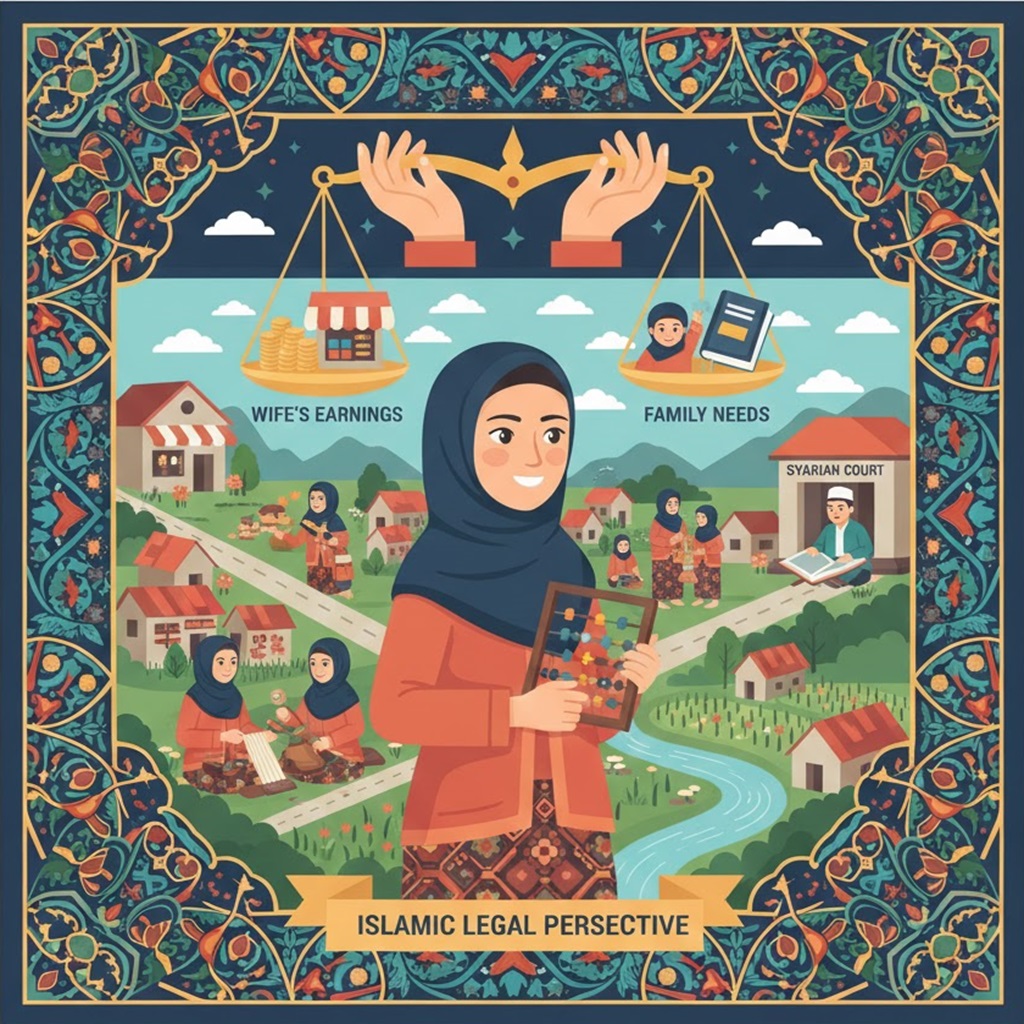
In Islam and Indonesian marriage law, the husband is positioned as the primary provider (nafkah), while the wife manages household affairs. However, socio-economic changes and certain circumstances such as the husband’s illness, disability, or insufficient income have led some wives in Lambheu Village, Darul Imarah District, to assume the role of the main breadwinner. This shift generates new dynamics, including emotional and social challenges, as well as questions about its compatibility with Islamic legal norms. This study aims to analyze the phenomenon of wives as primary breadwinners in Lambheu Village and to assess its implications for spousal rights and obligations and for the concept of nafkah from the perspective of Islamic law. The research employs a descriptive qualitative design based on fieldwork, combining document analysis, observation, and in-depth interviews. Primary data were obtained from wives who serve as the economic backbone of their families (case-based informants), while secondary data were drawn from fiqh literature, normative sources, and related studies. Data were analyzed through data reduction, data display, and conclusion drawing. The findings show that, from an Islamic legal perspective, the husband remains the principal party responsible for providing financial support, while the wife may work or contribute to family maintenance as long as she continues to observe household responsibilities and does so on the basis of mutual agreement. The Lambheu case indicates that wives typically work due to emergency conditions such as the husband’s illness or financial hardship, highlighting the need for a fair interpretation of role distribution within the family. When carried out wisely and in accordance with Sharia, a wife’s employment is not a violation but rather an effort to strengthen family resilience and harmony. The article recommends strengthening household agreements through deliberation (musyawarah) on role-sharing, enhancing religious guidance and family counseling, and expanding community/state support (access to healthcare, economic empowerment, and social protection) so that wives’ economic contributions do not negate the husband’s nafkah obligation and the family’s overall welfare (maslahah) is maintained.
References
Al-Qaradawi, Yusuf. Contemporary Fatwas. Jakarta: Gema Insani, 1985.
Attamimi, Nazhifah. Fiqh Munakahat. Bogor: Hillian Pers, 2010.
Ayyub, Sheikh Hasan. Family Fiqh. Jakarta: Pustaka Al-Kaustar, 2001.
Bambang, Rudi, and Anas. "Wives as Primary Breadwinners and Their Impact on the Family from an Islamic Law Perspective (A Case Study of the Lives of Migrant Workers' Families in East Lampung Regency)." Fitrah: Journal of Islamic Studies 4, no. 2 (2018): 402. https://jurnal.uinsyahada.ac.id/index.php/F/article/view/950 (Islamic Family Law).
Basri, Rusdaya. Fiqh Munakahat. Jakarta: Kaaffah Learning Centre, 2019.
———. Fiqh Munakahat: 4 Schools of Thought and Government Policy. Depok: Rajawali Pers, 2024.
Djazimah, Siti, and Ihab Habudin. “Wives as Primary Breadwinners: A Study of Kapok Crafters in Imogiri Village, Bantul, Yogyakarta.” Al-Ahwal 9, no. 1 (2016): 61–67. https://ejournal.uin-suka.ac.id/syariah/Ahwal/article/view/1100.
Fatimah, Titin. “Career Women in Islam.” Musawa 7, no. 1 (2015): 42. https://ejournal.uin-suska.ac.id/index.php/al-fikra/article/view/3823
Fattah, Abdul. Qualitative Naturalistic Research Methods. Bandung: Tarsito, 2003.
Handayani, Lilis. “The Role of Wives as Primary Breadwinners in the Perspective of Islamic Law (Case Study of Harum Sari Village, Tamiang Hulu District, Aceh Tamiang Regency).” Journal of Legal and Cultural Analytics (JLCA) 1, no. 3 (2022): 195. https://journal.formosapublisher.org/index.php/jlca/article/view/981.
Hermanto, Agus. Issues in Islamic Family Law in Indonesia. Malang: CV Literasi Nusantara Abadi, 2021.
Juwita, Dwi Runjani. “The Islamic Legal Perspective on Career Women.” El-Wasathiya: Journal of Religious Studies 6, no. 2 (2018): 188–89. https://jurnal.stisalhilalsigli.ac.id/index.php/tahqiqa/article/download/120/93/401.
Lala, Lailiyah Buang. “Imam Syafi’i’s Method of Istinbath Law: An Analysis of the Concept of Wife’s Maintenance.” Journal of Religion and Human Rights 6, no. 2 (2017): 267. https://ejournal.uin-suka.ac.id/syariah/inright/article/view/1454/1260.
Muazammil, Iffah. Fiqh Munakahat (Islamic Marriage Law). Tangerang: Tira Smart, 2019.
Mutawali, Muhammad, and Rahmah Murtadha. The Dowry in the Perspective of Islamic Law. Bandung: Kaifah Publishing, 2018.
Nur, Syamsiah. Fikih Munakahat: Marriage Law in Islam. Tasikmalaya: Hasna Pustaka, 2022.
Nurhayati. “Social and Psychological Consequences.” Journal of Islamic Psychology 8, no. 3 (2020): 59–61. https://jurnal.ugm.ac.id/populasi/article/view/12245.
Law No. 1 of 1974 on Marriage (n.d.).
Rahmawati, Theadora. Fiqih Munaqahat 1 (From the Process Towards Marriage to the Rights and Obligations of Husband and Wife). East Java: Duta Media Publishing, 2021.
Rahmayati, T. Elfira. “Conflict of Dual Roles in Career Women.” Journal of the Ganesha Polytechnic Institution Medan Juripol 3, no. 1 (2020): 155. https://jurnal.polgan.ac.id/index.php/juripol/article/view/10920.
Shihab, Quraish. Grounding the Qur'an: The Function and Role of Revelation in Society. Bandung: MIzan, 2007.
Suaib, Abdullah, and Suci. “The Role of Wives as Primary Breadwinners in Families from an Islamic Law Perspective (Case Study of Tangkahan Durian Village, West Brandan District, Langkat Regency).” Mutawasith: Journal of Islamic Law 1, no. 2 (2018): 231. https://jurnal.iailm.ac.id/index.php/mutawasith/article/view/354 (The Role of the Wife as the Primary Breadwinner of the Family in the Perspective of Islamic Law: A Case Study
Sugiyono. Qualitative, Quantitative, and R&D Research Methods. Bandung: Alfabeta, 2018.
Syafe’I, Rachmat. Fiqh of Marriage. Bandung: CV Pustaka Setia, 2011.
Interview with Mrs A, on 2 July 2025
Interview with Mrs. M, on 2 July 2025
Interview with Mrs N, on 10 May 2025
Interview with Mrs. S, on 2 July 2025
Interview with Mrs Y, on 10 May 2025, n.p.
Yani, Ahmad, and Moh Jazuli. “The Value of Spousal Maintenance in the Views of Classical and Contemporary Scholars.” Teraju: Journal of Sharia and Law 2, no. 2 (2020): 165–67. https://ejournal.stainkepri.ac.id/teraju/article/download/164/111.
Downloads
Published
How to Cite
Issue
Section
License
Copyright (c) 2026 Rabzani Zammima Asri Purba1, Fakhrurrazi M. Yunus, Gamal Achyar

This work is licensed under a Creative Commons Attribution-NonCommercial-ShareAlike 4.0 International License.
Quru': Journal of Family Law and Culture




.png)